Home Blog
Network International (Network), a leading enabler of digital commerce across the Middle East and Africa (MEA) region, has launched innovative in-person payment solutions in Kenya, as part of its plans to transform payment across Africa. “Launching our point-of-sale solutions is part of our strategy to enter the in-person payments market in Kenya. As a...

Hilton (NYSE: HLT) today announced the Africa expansion of DoubleTree by Hilton, its upscale brand known for its warm hospitality, with the signing of three new properties in key destinations across North, West and Central Africa: Morocco, Togo and the Republic of Congo. These latest signings include Hilton’s debut in Togo and underscore Hilton’s commitment to growing its footprint on the continent, where the global hospitality company now has more than 100 hotels in its pipeline. Carlos Khneisser, chief development officer, Middle East & Africa, Hilton, said: “Africa’s major business hubs, rich cultural heritage, and spectacular landscapes continue to present exciting opportunities for growth. We are delighted to expand our footprint with three new DoubleTree by Hilton properties, which will join Hilton’s growing portfolio in Africa as we plan to nearly triple our presence across the continent in the coming years. These signings reflect our commitment to supporting Africa’s hospitality sector – with dedicated local development teams on the ground and deep expertise in these markets, we are well positioned to create long-term value for our partners and deliver world-class stays to our guests.” DoubleTree by Hilton Lomé Airport, Togo Marking Hilton’s debut in Togo, DoubleTree by Hilton Lomé Airport is developed in partnership with SODEXH SA. Strategically located opposite Lomé International Airport, the hotel will be the country's first internationally branded airport property, offering upscale services and conference facilities to business travellers. The hotel will feature 165 guest rooms and suites, a signature restaurant, a lobby café, as well as an outdoor pool, spa and fitness centre. Flexible meeting spaces include a ballroom and three meeting rooms, designed to cater to business travellers and transit guests with easy access to the city’s commercial and cultural hubs. DoubleTree by Hilton Kintele, Republic of Congo Located in Brazzaville’s emerging Kintele district, this property will include 200 guest rooms and suites, a fitness centre, tennis court, spa, and beauty salon. Guests will enjoy multiple dining venues including a lobby bar and terrace, pool bar, and two specialty restaurants with panoramic views of the Congo River. The hotel will house West Africa’s largest conference centre, which spans 75,000 sqm with an auditorium for 1,500 guests, banquet halls, a VIP lounge, and museum hall – making the hotel a prime accommodation choice for major events and corporate gatherings. Signed with Société d’Exploitation et de Développement des Infrastructures du Congo (SEDIC), DoubleTree by Hilton Kintele will start welcoming guests in 2026, joining the recently opened Hilton Brazzaville Les Tours Jumelles Hotel & Residences. DoubleTree by Hilton Marrakech La Palmeraie, Morocco Set in Marrakech’s renowned Palmeraie district, this resort-style property will offer 228 guest rooms and suites, landscaped gardens, and multiple dining options including an all-day dining restaurant, lobby café, pool bar, and two specialty restaurants. Guests will enjoy a relaxing pool area and kids pool, gym, spa, and paddle court. The hotel will also feature a ballroom and meeting rooms, with close proximity to the city’s historic district and vibrant souks. The hotel is expected to open in 2028. This latest signing joins Hilton’s rapidly growing footprint in Morocco with 16 hotels in the pipeline, including the highly anticipated Waldorf Astoria Rabat Salé and Hampton by Hilton Ben Guerir – both opening soon. The properties will join DoubleTree by Hilton´s global portfolio of more than 700 hotels across 61 countries and territories, where the award-winning brand is renowned for delivering warm and contemporary hospitality to business and leisure travellers – complete with its signature DoubleTree chocolate chip cookie welcome. DoubleTree by Hilton’s momentum continues across Africa with several signings announced earlier this year, including DoubleTree by Hilton Cabinda Futila Residences in Angola, DoubleTree by Hilton Adama and DoubleTree by Hilton Dire Dawa in Ethiopia, and DoubleTree by Hilton Fes Golf in Morocco.
Hilton (NYSE: HLT) today announced the Africa expansion of DoubleTree by Hilton, its upscale brand known for its warm hospitality, with the signing of three new properties in key destinations across North, West and Central Africa: Morocco, Togo and the Republic of Congo. These latest signings include Hilton’s debut in Togo and underscore Hilton’s commitment to growing its...

Financial infrastructure firm, Tala, has launched a tokenized lending platform to cater to borrowers without a banking history in the world. It plans to deploy $50 million credit facility via the platform in USDC to power blockchain-enabled, permission-less lending for millions of global customers. The Artificial Intelligence (AI) underwritten consumer lending tool, in partnership with Huma Finance, is the first of its kind in Kenya and is powered by Solana and supported by USDC liquidity facilitated by the Huma Protocol For billions of consumers who lack access to traditional banking services and credit history systems, tokenized lending offers faster and more reliable access to credit, better rates through a global capital network, and a portable, digital reputation that enables broader participation in the global economy. Tala’s existing customer base of nearly 13 million across multiple emerging markets creates immediate scale for blockchain adoption. "After a decade operating across multiple emerging markets, we know how to translate frontier technologies into real-world financial power," said Shivani Siroya, founder and CEO, Tala. "By pairing Tala’s trusted platform with the power of blockchain technology, together with Huma and Solana, we can expand financial access, eliminate systemic inefficiencies, and help millions become active participants in the global digital economy.” The solution is powered by Tala’s proprietary credit engine, which has been trained on $7 billion in lending performance data across multiple continents. That dataset—largely invisible to banks and most AI systems—gives Tala the ability to evaluate borrowers who have historically been overlooked by the global financial system. By tokenizing these loans in an overcollateralized lending facility and connecting them to Huma’s liquidity pools, Tala unlocks a new funding mechanism for emerging market credit, bringing global capital directly to high-demand markets transparently and efficiently. Speaking during the launch, Erbil Karaman, Co-Founder of Huma Finance, said that Tala’s team has over a decade of experience in scaling high-performance lending programmes while providing financial access to tens of millions of people who need it the most.
Financial infrastructure firm, Tala, has launched a tokenized lending platform to cater to borrowers without a banking history in the world. It plans to deploy $50 million credit facility via the platformin USDC to power blockchain-enabled, permission-less lending for millions of global customers. The Artificial Intelligence (AI) underwritten consumer lending tool, in...

Kenya’s cloud and artificial intelligence boom may be entering its most consequential phase yet, as new data suggests local consultancies, AI startups and systems integrators stand to earn dramatically more from Amazon Web Services (AWS) than previously understood. A study by US-based research firm Omdia reveals that AWS partners worldwide can now generate “up to a $7.13 (Sh900) multiplier for every $1 (Sh130) of AWS sold,” a figure with enormous implications for East Africa’s technology ecosystem. The report, titled "Partner Ecosystem Multiplier: The AWS Opportunity 2025," was released on the sidelines of the AWS: Re-Invent event in Las Vegas, Nevada, which kicked off on December 1 and ends on December 5. It reached this conclusion after Omdia conducted in-depth interviews with 35 AWS partners across various geographies and partner types. The report’s central argument is blunt: in a region where businesses are hungry for automation, resilient infrastructure, and AI-powered customer engagement, the biggest revenue doesn’t come from selling cloud technology itself. Instead, it comes from the advisory, design, build, adoption, and managed services wrapped around it, the same areas where Kenyan firms have sought to differentiate themselves. “In the new era of AI, Omdia has forecasted a services opportunity tied to generative and agentic AI of $267 billion by 2030,” the research notes, positioning partners as the engines of this expansion. With Kenya’s financial institutions, telcos, and public agencies accelerating cloud migrations, the findings sharpen the conversation about who will capture the next decade of revenue. Kenyan companies already recognize the shift. For years, Kenya’s cloud market has revolved around foundational migrations: moving banks off aging data centres, helping enterprises modernize digital infrastructure, or building customer-facing platforms with elasticity and scale. But companies across Nairobi’s tech districts, from Westlands to Upper Hill to Ngong Road, are now repositioning their services for an AI-first world. The Omdia numbers help make the business case. The report states bluntly that 82 per cent of AWS partners are now delivering some form of AI as part of their transformation delivery, a seismic shift that mirrors Kenya’s adoption pattern: AI chatbots in banking, machine learning in fraud detection, recommender engines in e-commerce, and predictive analytics in agriculture and logistics. “Amazon Web Services (AWS) continues to be the market-leading provider of public cloud infrastructure in terms of market share. For customers to unlock the full opportunities of AI in their public cloud environments, they lean on a wide variety of services and expertise from their technology providers, specifically the partners within the AWS Partner Network.”
Kenya’s cloud and artificial intelligence boom may be entering its most consequential phase yet, as new data suggests local consultancies, AI startups and systems integrators stand to earn dramatically more from Amazon Web Services (AWS) than previously understood. A  study by US-based research firm Omdia reveals that AWS partners worldwide can now generate “up...
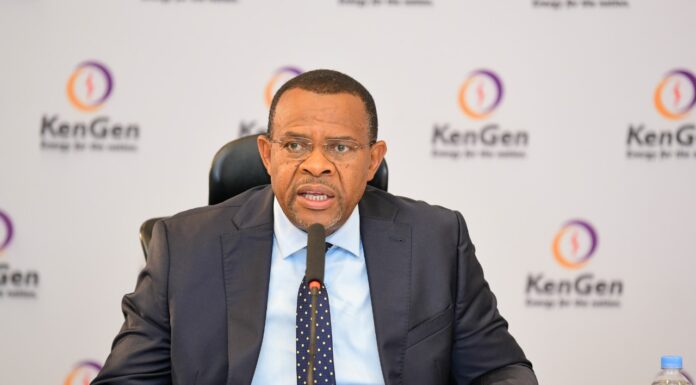
Kenya Electricity Generating Company shareholders will earn more this year after the power generator reported a 54 per cent increase in net earnings. Shareholders endorsed a first and final dividend of Sh0.90 per ordinary share for the financial year, up from Sh0.65 last year, after gaining Sh10.48 billion in profits, driven by cost reductions,...
Bolttech said the acquisition will allow it to integrate mTek’s technology into its global embedded insurance ecosystem. Stephan Tan, Chief Executive Officer for EMEA at bolttech, said, “This represents an exciting step forward for bolttech as we expand our footprint in Africa. mTek’s innovative platform and talented team share our vision of using technology to make protection more accessible.” “Together, we can accelerate digital transformation in insurance and extend the reach of embedded protection across the region.” mTek’s leadership will remain in place during the transition, with CEO Bente Krogmann continuing to oversee East African operations. Krogmann said the deal sets up the company for wider regional expansion. “Joining the bolttech family marks an exciting next chapter for mTek. Our technology, local insight, and commitment to inclusive insurance have transformed how customers access protection in Kenya, and this partnership allows us to scale that impact even further – bringing more innovative and relevant insurance solutions to customers at scale.” The company is expected to rebrand following the acquisition, as the firms work on integrating systems, staff, and partnerships.
lobal insurance technology firm Bolttech has acquired mTek, the Nairobi-based digital insurance platform, marking the latest consolidation move in East Africa’s fast-growing insurtech market. mTek, founded in 2019, operates a fully digital platform that allows customers to compare, buy, and manage insurance policies. The firm has partnered with major underwriters including...

Kaspersky’s (www.Kaspersky.co.za) detection systems discovered an average of 500,000 malicious files per day in 2025, marking a 7% increase compared to the previous year. Certain types of threats saw growth globally – there was a 59% surge in password stealer detections, a 51% growth in spyware detections, and a 6% growth in backdoor detections compared to 2024.
In the bustling Tushauriane area of Kayole, Embakasi, St. Patrick’s hospital is like an oasis in a desert. The level four hospital attends to thousands of patients in the densely populated Eastlands area. For the last 13 years, Ann Maina, the director and founder of the facility, has aspired to provide only the highest quality of care. Although the facility is widely known for its efficient services, it stands out when it comes to maternity care. From the onset, maternity care has always been dear to Mrs. Maina, a nurse. This was cemented into her heart after coming across debilitating and nerve-wracking experiences when she worked as a nurse in one of the local government hospitals. “The experience really left a bad taste in my mouth. I remember one time working in the maternity department, I witnessed nurses beating up an expectant mother in the delivery room. It was a heartbreaking moment for me and I really didn’t want to be part of that,” she recalls. Early in her career, she says she knew there was a way that mothers could deliver babies in a conducive environment, while receiving the best of care. “I felt that mothers should not suffer.” This prompted her to start a maternity home in her rented one-bedroom house, where she could afford mothers the best care she envisaged. For a start, she had a blood pressure monitoring machine, an examination bed and a drug cabinet. Her plan worked. Within a short time, more mothers visited her house, ready to deliver. “At one point, I had three expectant mothers coming to my house seeking assistance as they were ready for delivery. I handled them expertly. As others waited on the couch, I took in the first mother and she had a safe delivery. Within a short time, I ushered the rest into the delivery room and everything went well,” she shares. After making porridge for them, she discharged them after four hours. “Mothers need respect when giving birth. They need to be handled well.” With a vision, she realized that she was meeting a critical need in her society. Having tested the waters, she knew what needed to be done. “My patients needed to sleep on white sheets and pillows and once they have delivered, they need to be wheeled to their beds, be supported together with their babies, with lots of respect,” Naturally, expansion was in her mind, but there was a big problem; she had no money to expand. “I wanted to expand, but banks couldn’t give me money. Luckily, I had a Merry Go Round Chama that gave me some cash to expand.” Even with the cash injection from her Chama, she quickly found out that she couldn’t do more, especially when it comes to equipping a maternity unit. Seeing the potential of her dream, she decided to make a leap of faith and sold her house. With the proceeds, she then bought land and built structures at the current location. “I build the outpatients and the maternity section before the money ran out.” Despite the meager resources, Ann was motivated to keep going. At that point when she was starting out, she says she drew her motivation from the then president, Mwai Kibaki whose rallying call was to create over 500 000 jobs every year. “ I felt like the former president was talking to me directly, asking me to create jobs. With that I just went out and hired my first batch of professionals, including nurses, clinicians and doctors to help me run the show.” She remembers that the government of the day had made the business environment conducive, enabling businesses to make money. “Money became available to businesses through affordable bank loans”. What followed was a growth spurt that saw the business grow exponentially. Since its inception in 2012, St Patrick’s Hospital has become a household name in Kayole and environs. So phenomenal has been the growth that it has spawned a new branch. “As part of our expansion, we were able to buy land in Kenol, Muranga county and build and equip a fully fledged hospital, serving many people in the environs.” Mrs Maina attributes the hospitals' growth to sheer hard-work and determination. She appreciastes the fact that her husband joined and supported her to run the facility. “He could help from day one when I had to rush a patient to another facility in an ambulance. He was also instrumental in designing and building our facility.” Firstly, she says the hospital obtained favor from the locals, who patronized it. Secondly, the partnership with SafeCare, an international quality assurance and standards organization was a game changer. Once they joined SafeCare in 2012, Mrs Maina and her team were signed up for business and quality management training to improve their skills. The first step is assessment, which was an eye-opener for Mrs Maina. SafeCare found out that Ann and her team were not running the facility the right way. “We had no administration office, no systems. SafeCare helped them isolate the gaps and set in motion interventions in a bid to improve themselves. With this, they were able to streamline their record keeping, have audited accounts and a digitalized patient history. Next to identifying gaps, SafeCare provided St. Patrick’s hospital with practical tools, solutions and technical support, including access to finance. After the SafeCare intervention, Mrs Maina says her facility was able to obtain the first loan from Medical Credit Fund under the PharmAccess umbrella. It’s this experience that opened the doors for her to get credit from other institutions. She says that the impact of SafeCare was felt almost instantaneously. Shortly afterward, her facility was able to attract all the big insurers, as well as NHIF, a move that brought in many patients. “When the National Hospital Insurance Fund (NHIF) used to visit us for an evaluation, we never knew what they were looking for, and we didn’t know how to improve. After we started SafeCare and the NHIF visited us again, it was a whole new story’’. St. Patrick became NHIF accredited, ensuring a bigger client and income flow. Patient visits have risen from almost 600 to more than 2000 a month, especially now that they have also managed to contract corporate clients and private medical insurance companies. There’s no doubt that SafeCare has helped Ann to reposition her facility and increase its market value. Safecare also helped Ann and her team to mitigate risks in the workplace, especially by embracing handwashing and separating waste in color-coded bins. For Ann, running the hospital is not just a passionate endeavor, but one that should impact society. This explains why her facility hosts health campaigns to educate the community about hygiene. Safecare has certified the facility as a Level 4 but Mrs Maina is eager to go for the highest certification as well as be ISO-certified. “We have come a long way, and we are going far. Our aim now is to continue offering the highest quality of care to all patients, with dignity and respect.”
In the bustling Tushauriane area of Kayole, Embakasi, St. Patrick’s hospital is like an oasis in a desert. The level four hospital attends to thousands of patients in the densely populated Eastlands area. For the last 13 years, Ann Maina, the director and founder of the facility, has aspired to provide only the highest quality of care....
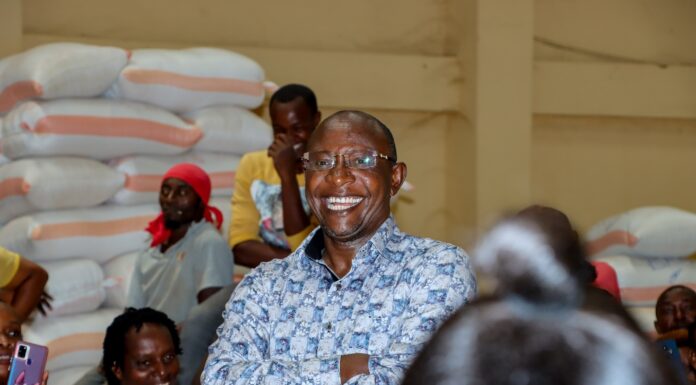
In the fertile plains of Mwea, Kirinyaga County, where endless rice paddies stretch beneath the gaze of Mount Kenya, Nice Digital City stands out like a beacon. Now a favorite stopover for Embu and Meru bound travelers, the city offers exquisite fine dining and entertainment facilities. The miles of rice paddies on both sides of the road is a feast for the eye. The endless green is only interrupted by human settlement and shopping centers. Nice digital city is not your usual shopping mall. It is more. You enter through the Shell petrol station where charming attendants will tenderly welcome and guide guests to where their needs will be met. Principally, it is a stopover joint for food and refreshments. But there is more. You will fuel your car, shop, eat, sleep, relax, let your kids roll and much more. Apart from Muammar Gaddafi and his female bodyguards, I do not know who else is as big on women empowerment like Nice Digital City. The waitresses and pump attendants are mostly women. In terms of customer experience Nice Digital City is as good as any five-star hotel in Nairobi. The focus is on speed, convenience and quality. You are served within two seconds of sitting down. The food itself is the stuff made for kings. There is this focus on cleanliness that goes beyond staff uniform to the restaurants themselves all the way to the restrooms where plenty of water and soap is their middle name. Nice Digital City is a bonanza for someone keen on the story of rural development and how enterprises are scaled up. With the rice economy at the center, Nice Digital City has become our best version of what Americans call motels. From a mere swamp to a shopping and entertainment village, Nice Digital City can be fashioned as a tourist stop for the development of local tourism around the Mount Kenya Circuit. It’s a product of one man’s ambition and vision to transform not just his own life but an entire community. Njiru Mkombozi, the founder of Nice Rice Millers and Nice Digital City rose from a struggling farmer to a leading agripreneur, proving that determination and innovation can turn even the humblest crop into gold. Njiru is a battle-hardened entrepreneur, having been in the trenches for long before finally striking gold. He says he tried his hand in eight failed ventures before finally succeeding. He started out in the 80’s when he was employed as a tailor. He later quit his job to try farming. He grew tomatoes and french beans on a 10-acre piece of land in Karaba village. With meagre earnings, he quit the farming venture and focused on selling second hand clothes, a business venture that only lasted for two months. With some savings, he then ventured into the agrochemicals industry by launching an agrovet that supplied pesticides to farmers. This business did not survive, thanks to what he terms as cut throat competition. Njiru would later venture into the Matatu industry, supply of construction materials and sand transport business before trying his hand in a brewery, which opened the way for his breakthrough. Once he had set up the brewery business, he failed to secure a license. Not one to give up, he converted the facility into a maize milling factory. With not enough rains, maize was doing badly in the area. However, he noticed that one crop was always thriving-rice. And farmers were having surplus harvests. Seeing a big gap, he converted his maize milling business into a rice miller and as they say, the rest is history. “Farmers were waiting for three months to have their rice milled at government-owned mills,” he said. Njiru was born into a family of small-scale rice farmers in Karaba village in Kirinyaga county. Like many in the region, his parents toiled under the sun, harvesting rice that middlemen bought at meager prices. After completing secondary school, Njiru took up farming but quickly realized that without value addition, farmers would always remain poor. When he finally had established his on rice mill, e as keen to uplift local farmers. Rice farmers could take their rice to him for milling, and before long, he was the go-to miller in the area. As rice milling gained traction, Mwea was fast becoming a stop over town for travelers willing to buy rice. Again, Njiru saw the opportunity to cash in and constructed a mall. Today, Nice Digital City is a haven for travelers. The property rests on 8 acres of land and is a major attraction to locals and travelers. Njiru's business empire comprises Nice Digital City, Nice Rice Mills, Nice Charcoal, Nice Mineral Water, Nice Bakeries and Nice Jikos. Nice Digital City has a supermarket, a 75-bed hotel, swimming pool, chemist and gardens, among other amenities. He says that visitors can freely use the gardens as long as they spend on food and drinks at the hotel. His business empire has over 80 permanent staff and about 5,000 others indirectly through transport and retail. Having made an impact, Njiru says he’s not yet done. He dreams of taking the Nice rice brand to every county through his wagons, an endeavor that’s already turning into a success.
By George Marenya In the fertile plains of Mwea, Kirinyaga County, where endless rice paddies stretch beneath the gaze of Mount Kenya, Nice Digital City stands out like a beacon. Now a favorite stopover for Embu and Meru bound travelers, the city offers exquisite fine dining and...
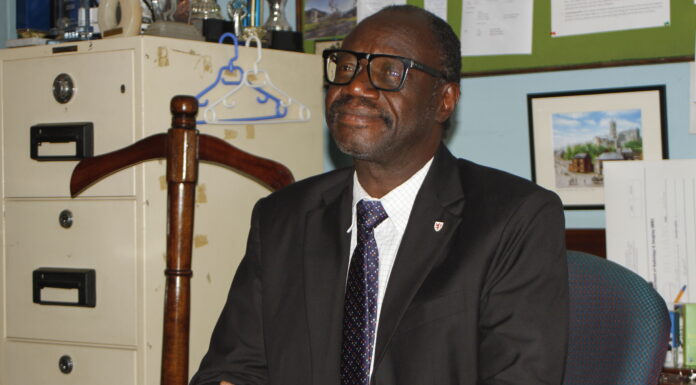
In the heart of Nairobi’s Kariokor neighborhood, Starehe Boys’ center and School ishard to miss. It’s an academic giant and a landmark. Founded in 1959 by Dr. GeoffreyGriffin, Mr. Joseph Kamiru Gikubu and Mr.Geoffrey Gatama Geturo, the school haslived upto its billing of being a citadel of knowledge for bright but economicallydisadvantaged students. Under the stewardship of...
By Amos Wachira As we navigate an era of economic uncertainty and widening inequality, microfinance continues to stand as a beacon of hope for millions around the world. This issue of Business insights Africa Magazine delves into the transformative power of small-scale financial services, showcasing how access to credit, savings, and insurance can uplift individuals, families, and entire communities. Microfinance is more than just loans—it’s a tool for empowerment. For low-income entrepreneurs, especially women, a small loan can mean the difference between subsistence and self-sufficiency. It enables a seamstress to buy her own sewing machine, a farmer to purchase better seeds, or a street vendor to expand her inventory. These seemingly modest investments create ripple effects, fostering local economies and breaking cycles of poverty. In this edition, we highlight inspiring stories of borrowers who have turned microloans into thriving businesses, proving that financial inclusion is key to sustainable development. Yet, the microfinance sector is not without its challenges. High interest rates, over-indebtedness, and regulatory hurdles remain pressing concerns. Critics argue that some institutions prioritize profits over social impact, risking the very mission they were founded to serve. We examine these issues head-on, featuring Dr. Patrick Gthondu, chief Executive of Bimas Kenya on responsible lending practices and the evolving role of fintech in making microfinance more transparent and accessible. One of the most exciting developments in recent years is the fusion of microfinance with digital technology. Mobile banking, blockchain, and AI-driven credit scoring are revolutionizing how financial services reach the unbanked. In our cover story, we explore how fintech startups like SasaPay are bridging gaps left by traditional institutions, particularly in remote and underserved regions. These innovations are not just changing microfinance—they’re redefining financial inclusion altogether. As we look to the future, the potential for microfinance to drive social change has never been greater. Climate resilience loans, education financing, and health-related microinsurance are emerging as critical tools in addressing global challenges. We must continue to advocate for ethical practices, investor accountability, and policies that prioritize the underserved. At Business Insights Africa, we believe that finance, when wielded with purpose, can be a force for good. Whether you’re an investor, practitioner, or simply someone passionate about economic justice, we invite you to engage with these stories, share your insights, and join the conversation on how microfinance can build a more equitable world. Thank you for reading, and for being part of this mission. editor@businessinsights.africa
By Amos Wachira As we navigate an era of economic uncertainty and widening inequality, microfinance continues to stand as a beacon of hope for millions around the world. This issue of Business insights Africa Magazine delves into the transformative power of small-scale financial services, showcasing how access to credit, savings, and insurance can uplift individuals,...

MOST POPULAR

HOT NEWS